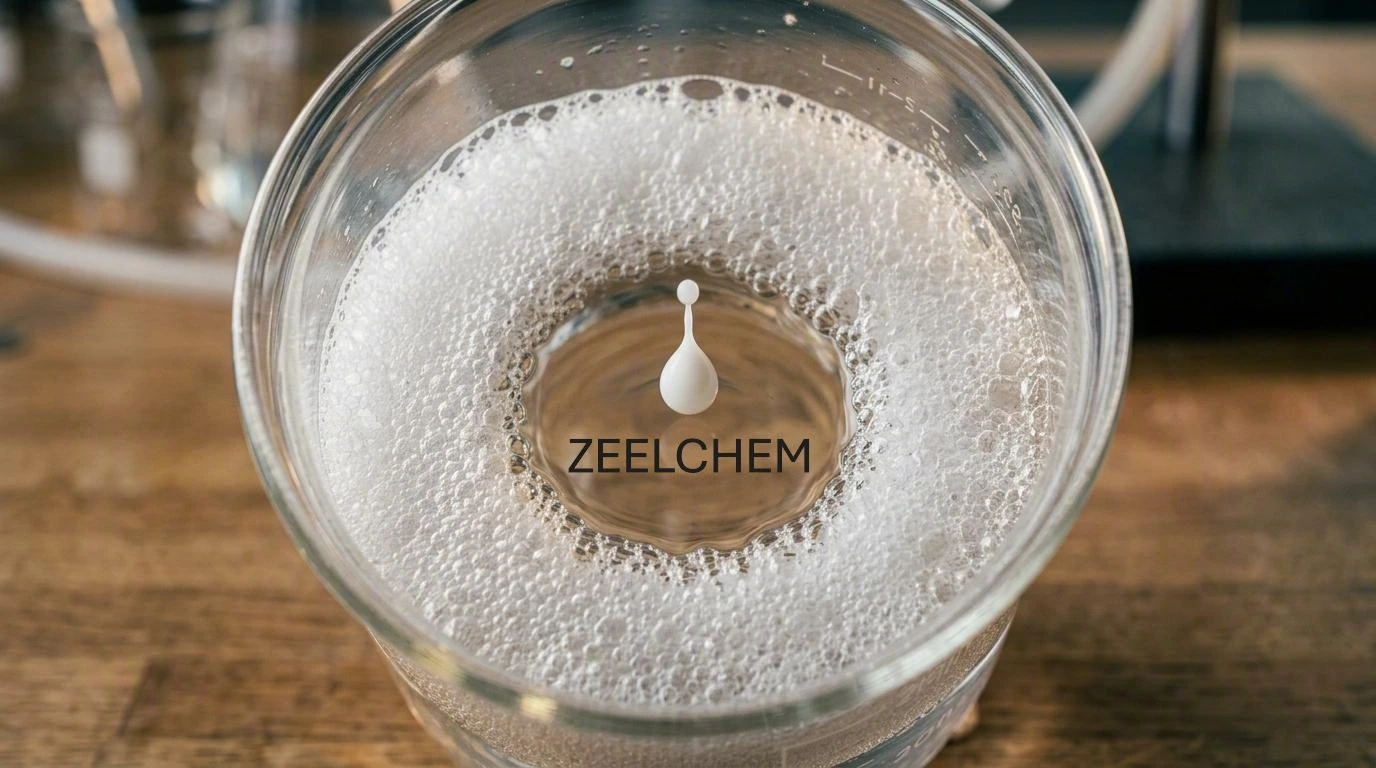
What is a Silicone Defoamer? Complete Guide for Industrial Foam Control
Learn what a silicone defoamer is, how it works, its benefits, industrial applications, dosage, and how to choose the right foam …
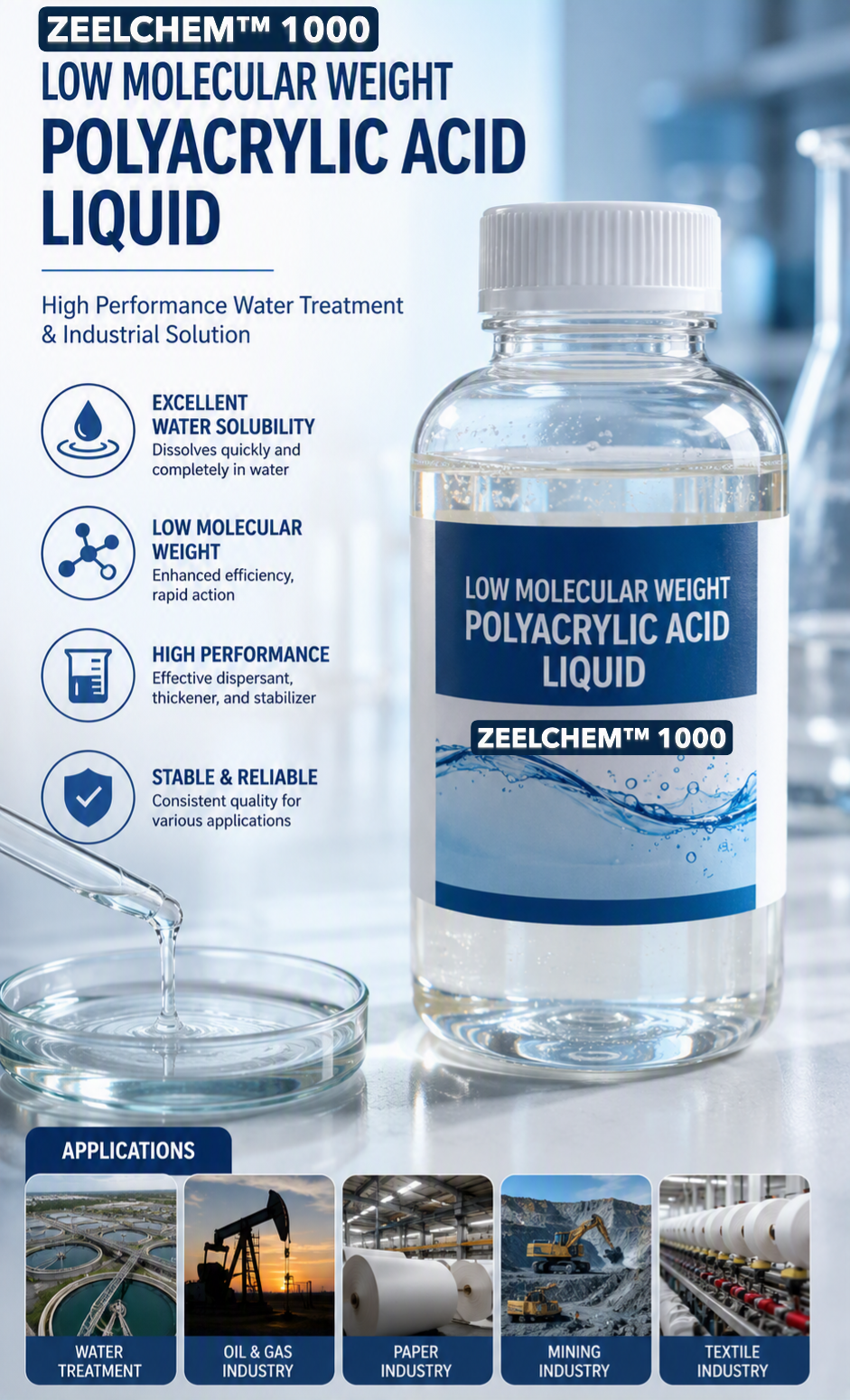
In industrial water treatment, polymer selection depends on molecular weight (MW), not only chemistry. Low (LMW) and high (HMW) molecular weight polyacrylic acid work by different mechanisms because of their chain length.
| Feature | LMW PAA (1,000–5,000 g/mol) | HMW PAA (>100,000 g/mol) |
|---|---|---|
| Primary action | Threshold inhibition & crystal distortion | Flocculation & coagulation |
| Mechanism | Adsorbs onto crystal nuclei | Bridges between particles |
| Target | Dissolved ions | Suspended solids |
| Application | Cooling towers, boilers, RO | Wastewater, clarification |
Small molecules adsorb onto growth sites of sub-microscopic CaCO₃ nuclei; HMW chains are too bulky to interfere this early.
LMW PAA disrupts the lattice, producing irregular scale that is non-adherent and stays suspended in the flow.
Carboxyl groups (−COO⁻) chelate Ca²⁺ and Mg²⁺; the short chain gives a high density of functional groups per gram.
HMW polymers bridge particles into flocs, which in cooling water can cause deposits in low-flow zones and clog narrow heat-exchanger passages or filters.
Learn what a silicone defoamer is, how it works, its benefits, industrial applications, dosage, and how to choose the right foam …
Coagulants, flocculants, disinfectants, pH adjusters, scale and corrosion inhibitors: what each water treatment chemical does and…
Silicone defoamers and anti-foaming agents: high-performance foam control for coatings, water treatment, paper, food and textiles.