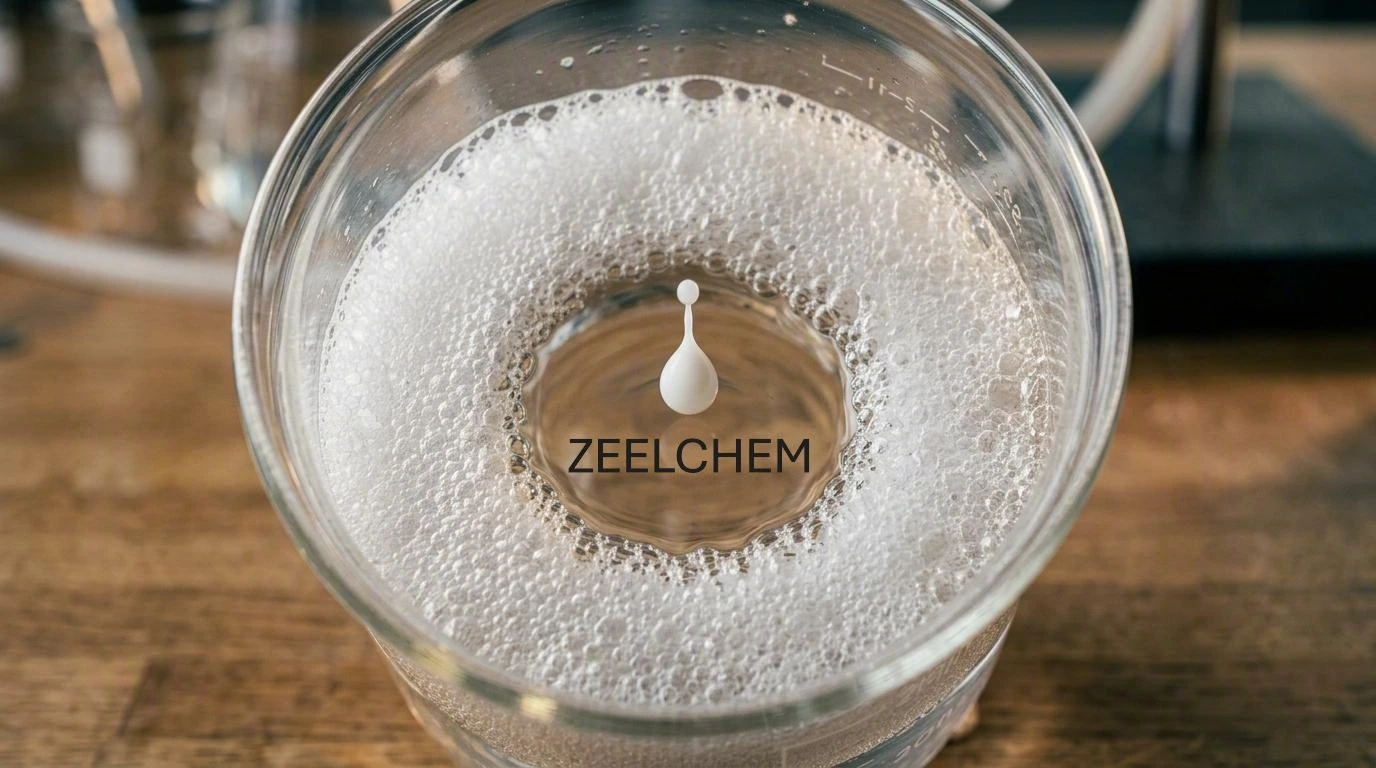
What is a Silicone Defoamer? Complete Guide for Industrial Foam Control
Learn what a silicone defoamer is, how it works, its benefits, industrial applications, dosage, and how to choose the right foam …

Evaporation in cooling towers concentrates dissolved solids such as calcium carbonate and calcium sulphate. Once they exceed solubility limits, they form hard scale. LMW PAA (1,000–5,000 g/mol) prevents this in two ways:
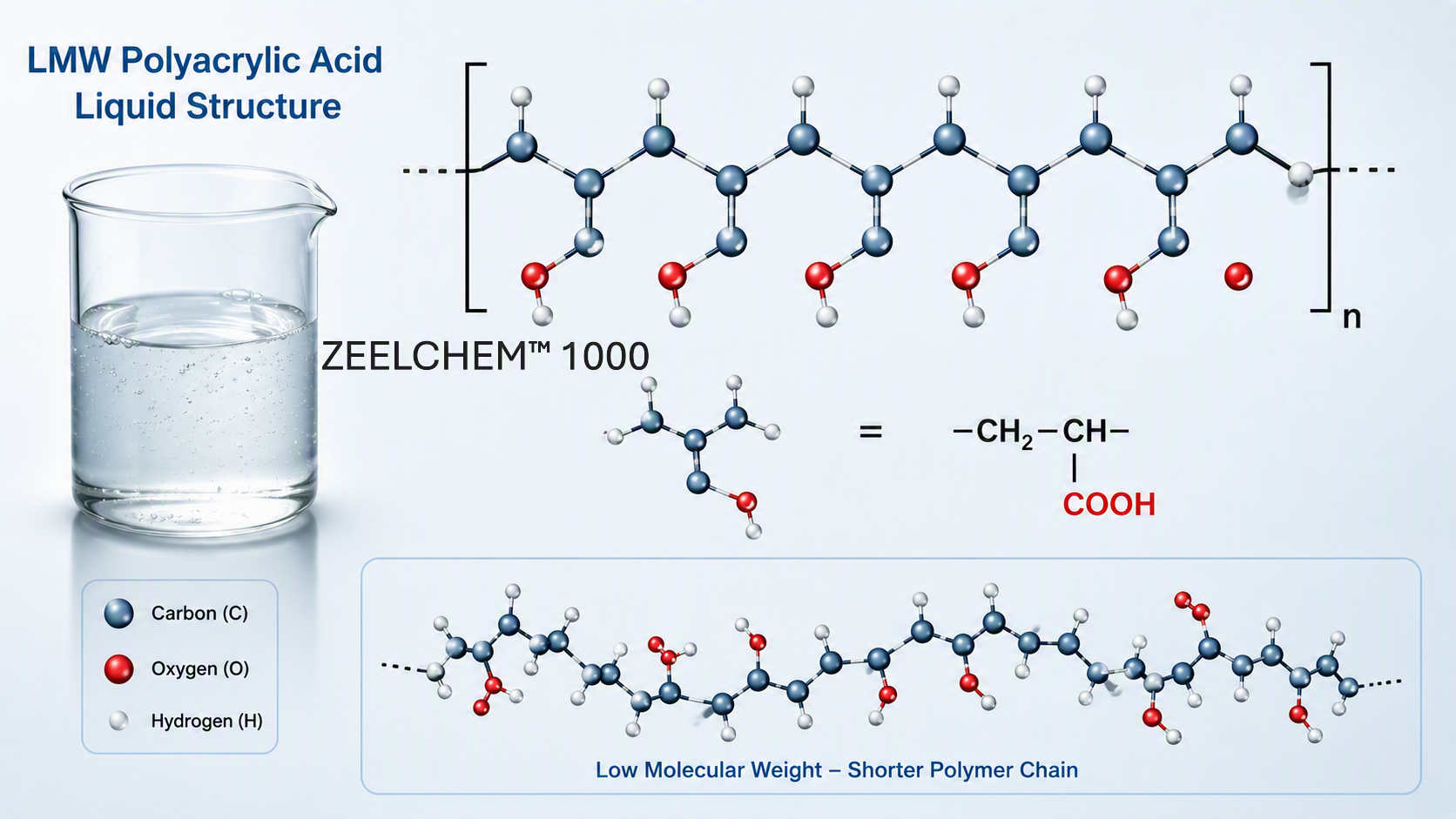
Confirm compatibility with oxidising (chlorine, bromine) and non-oxidising biocides. PAA works synergistically with phosphonates and azoles; jar-test when changing formulations.
| Action | Frequency | Goal |
|---|---|---|
| Check active levels | Weekly | Residual PAA within effective range |
| Verify feed pumps | Monthly | Delivery matches system demand |
| Monitor heat exchange | Continuous | Watch pressure drop and temperature |
| Review blowdown | Quarterly | Minimise water waste, keep scale control |
Learn what a silicone defoamer is, how it works, its benefits, industrial applications, dosage, and how to choose the right foam …
Coagulants, flocculants, disinfectants, pH adjusters, scale and corrosion inhibitors: what each water treatment chemical does and…
Silicone defoamers and anti-foaming agents: high-performance foam control for coatings, water treatment, paper, food and textiles.